.png)

July PM Mixer part 2: Embedding circular economy principles into project and procurement practices

The July PM Mixer brought together a dynamic mix of project professionals, academics, and students to explore one of the most pressing challenges facing our industry today: how to translate sustainability strategy into meaningful, measurable delivery.
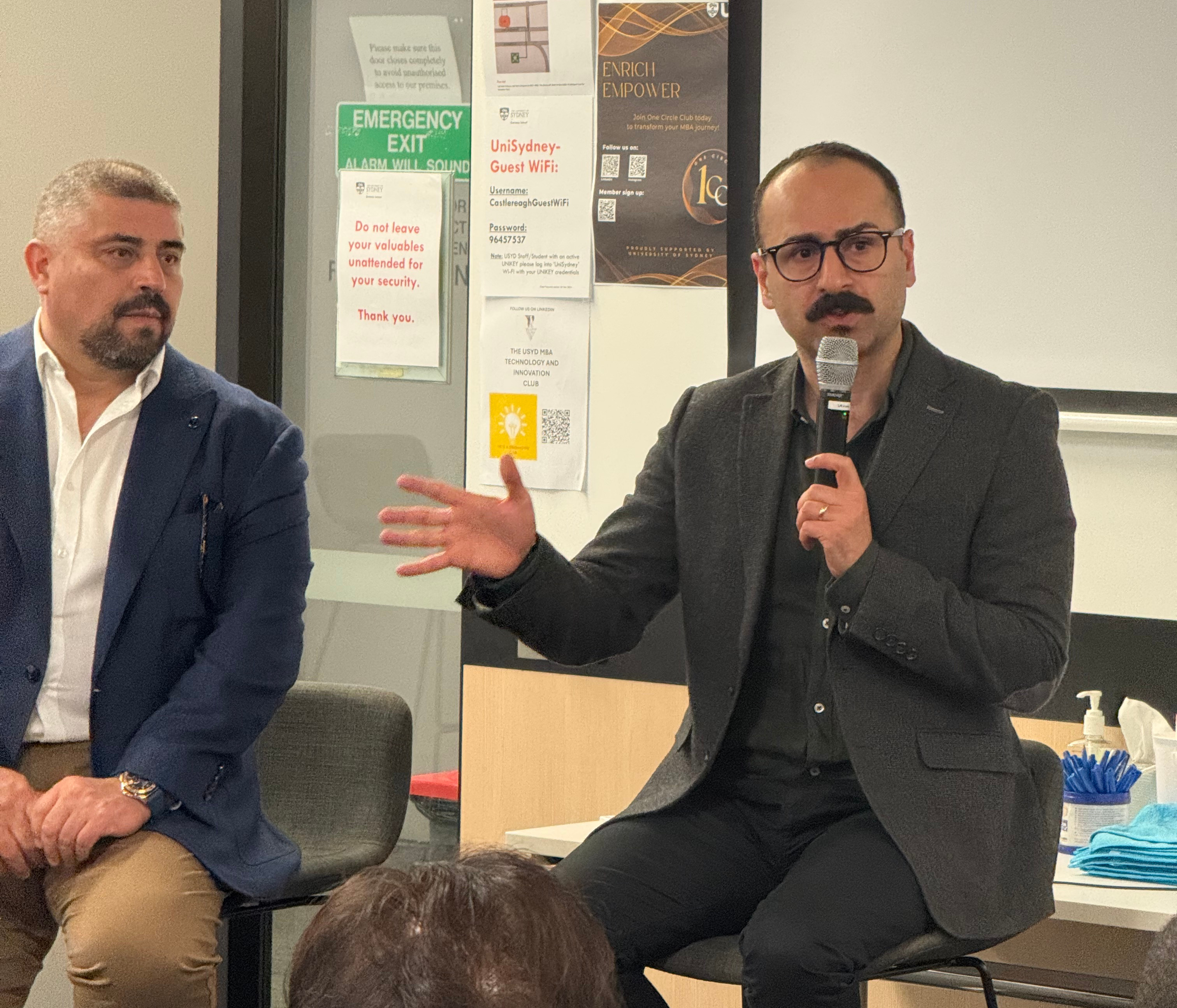
The session centred on offering a practical lens on how organisations can move from high-level commitments to tangible outcomes, featuring insightful perspectives from Jose Fredes (Commercial Manager Property & Procurement at The Smith Family) and Hadi Vandchali (ESG and Procurement Consultant).
Embedding circular thinking into delivery
Building on the foundations of sustainable delivery, the next step is to move beyond reducing impact and towards rethinking how value is created and sustained over time. Circular economy principles introduce a systems perspective—one that challenges linear models of consumption (take, make, consume, dispose) and instead prioritises the continuous use and recovery of resources. It introduces practical considerations that must be addressed early and consistently throughout delivery.

A key insight is the need to challenge assumptions before decisions are locked in. This begins prior to procurement, with fundamental questions around demand and use:
Is a new purchase required, or can existing assets be redeployed?
Can functionality be delivered through shared or service-based models rather than ownership?
During delivery, the focus shifts to selecting solutions that support circular outcomes, such as modular designs, recycled inputs, and adaptable components. These choices directly influence how assets perform over time and how easily they can be maintained or repurposed.
Post-delivery, the emphasis moves to lifecycle management. Repair, refurbishment, and structured take-back processes ensure that materials and components retain value beyond their initial use, reducing waste and extending utility.

Role of procurement in driving circular outcomes
Procurement plays a central role in enabling circular economy outcomes, but its impact depends on how it is positioned within the organisation. When treated as a strategic function, it can influence not only supplier selection, but also market behaviour and innovation pathways.

Embedding circular principles into contract management is a critical part of this shift. This includes:
Defining clear performance indicators related to circular economy outcomes
Incorporating sustainability and circular metrics into regular performance reviews
Requiring consistent reporting on supplier performance and improvement initiatives
Creating mechanisms for continuous improvement, such as better repair processes or enhanced waste tracking
These practices ensure that circular objectives are not abstract goals, but measurable and enforceable elements of project delivery.
More broadly, procurement decisions can help build confidence in emerging circular solutions. By creating demand for products and services that prioritise reuse, repair, and recovery, organisations contribute to wider market development while also strengthening their own resilience.

Circular economy in action
Local government initiatives across New South Wales demonstrate how these concepts are being applied in practical, measurable ways. These examples highlight how targeted programs, procurement decisions, and community engagement can collectively support circular outcomes.
At a community level, initiatives such as repair events delivered by The Hills Shire Council illustrate how circular thinking can be embedded into everyday behaviour. By extending the life of household items—ranging from small appliances to clothing and bicycles—these programs reduce waste generation while promoting reuse and repair as viable alternatives to replacement. Importantly, they also build awareness and capability within the community, reinforcing circular practices beyond organisational boundaries.

From an infrastructure perspective, Port Stephens Council provides a strong example of how procurement and engineering decisions can support circular outcomes at scale. By incorporating recycled materials such as glass, rubber tyres, and reclaimed asphalt into road construction, the council has reduced reliance on virgin resources while diverting waste from landfill. This approach also demonstrates how circular economy principles can deliver dual benefits—environmental outcomes alongside measurable reductions in emissions and material costs across project lifecycles.
Cumberland City Council highlights the role of creative reuse and community partnerships in driving circular impact. Through initiatives that repurpose materials—such as converting retired banners into reusable products during their Banners to Bags Campaign for Plastic Free July 2025—the council has demonstrated how waste streams can be transformed into functional assets. These programs not only reduce landfill but also engage local communities, schools, and organisations in circular practices, reinforcing broader behavioural change.

Final thoughts
Progress towards a circular economy depends on how different groups apply and translate these principles into practice.
For students, the priority is to develop systems thinking—challenging assumptions, considering full asset lifecycles rather than isolated activities, and building the capabilities required to operate in increasingly circular environments.
For practitioners, the focus shifts to execution: identifying where impact can be realised, concentrating on high-value or high-spend areas, piloting new approaches, and scaling successful outcomes through cross-functional collaboration.
For academics, the role lies in strengthening the bridge between theory and application—generating robust evidence to inform decision-making, translating research into practical tools, and supporting both industry and government in navigating the transition.
Together, these perspectives reinforce that circular economy outcomes are not delivered through a single function or initiative, but through coordinated effort across knowledge, practice, and implementation.

Ready to embed circular economy principles into your projects?
At PMLogic, we help organisations translate strategy into practical delivery outcomes through effective project, program, and portfolio management. If you are looking to integrate sustainability and circular economy principles into your projects and procurement practices, our team can support your journey.


Comments